

When Democracy Works: The Brazilian Example
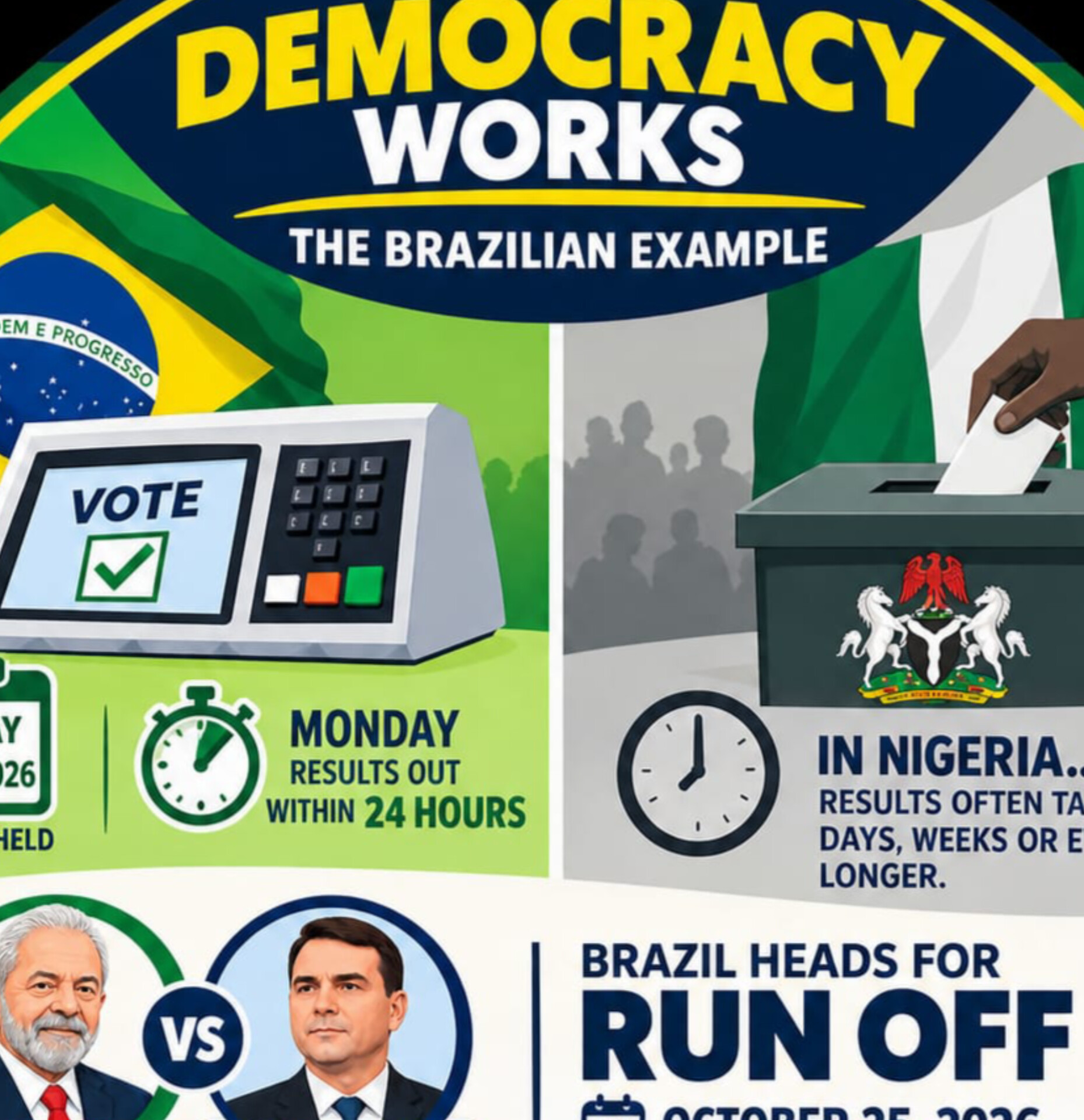

Brazil conducted its presidential election on Sunday, October 4, 2026, and by the following day, the outcome of the first round was already clear.

The country is heading for a runoff on October 25,* between incumbent President *Luiz Inácio Lula da Silva and Senator Flávio Bolsonaro, son of former President Jair Bolsonaro.
With almost all the votes counted, Flávio Bolsonaro led with about 47%, while Lula polled about 45%. Neither secured the required majority, hence the runoff.
What is particularly noteworthy is the speed and transparency of the process. Brazil’s electoral authority began publishing results in real time immediately after voting closed, allowing citizens to follow the counting as it progressed.
This raises an important question for Nigeria:
Why should Nigerians have to wait so long for election results in an era of electronic voting, technology and real-time data transmission?
The issue is not merely about speed. It is about public confidence, transparency, accountability and trust in the electoral process.
Brazil’s example shows that where electoral technology, institutions and transparent procedures work together, citizens can follow the process and know the outcome within a remarkably short period.
Nigeria can and should learn from systems that strengthen confidence in elections.
Democracy is not only about voting; it is also about ensuring that the people’s votes are counted, verified and transparently reported without unnecessary delay.
Ejiakor, Williams Ezeikpe
Public/Political Affairs Analyst.